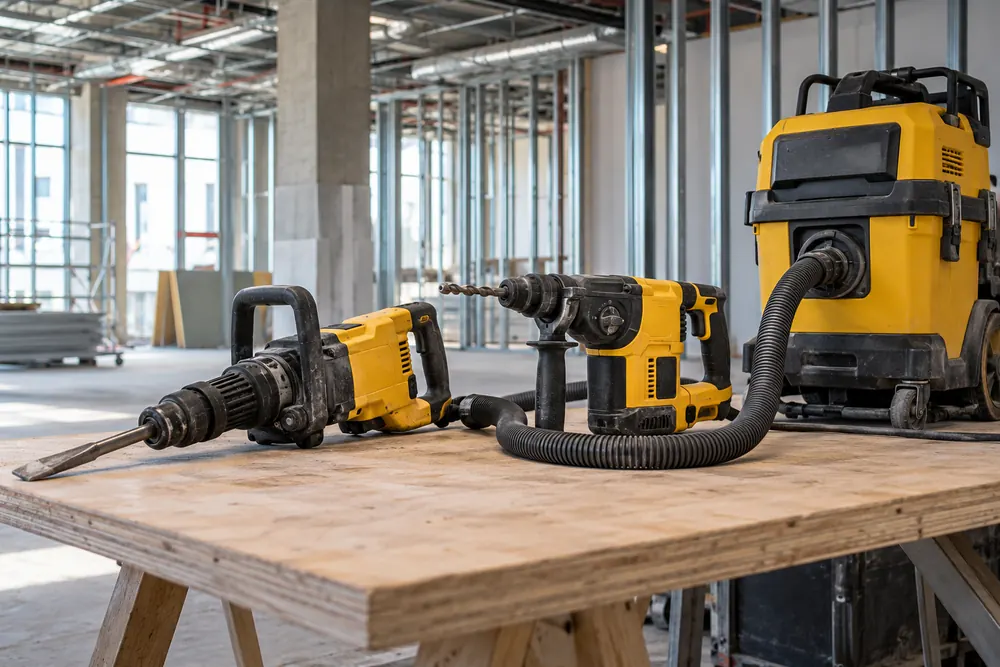
Tools For Maintenance And Fit-Out Work
A short maintenance window is easier to use when the drill, breaker or cutting equipment matches the task. We take enquiries for professional tool hire from contractors, facilities managers, commercial landlords and maintenance teams across Manchester. Start with what needs doing, rather than a model name, and include the material you will be working on.
For drilling, explain the hole diameter, depth and base material. For breaking, say whether you are removing wall tiles, chasing masonry or lifting a concrete slab. These are different duties, and selecting a heavier tool by default can make handling harder without improving the result.
Commercial premises also bring practical restrictions. A school corridor, occupied office and open warehouse need different arrangements for noise, dust and moving equipment. Tell us about working hours, access control and any activity that must continue nearby.
Specify The Whole Tool Setup
A bare tool rarely tells the whole story of a hire requirement. State whether you need drill bits, chisels, blades, extension leads, a suitable transformer or compatible dust extraction. Consumable wear and replacement arrangements should be clear in the written quotation before equipment reaches site.
Confirm the available electrical supply with the person responsible for the installation. Battery equipment can help where trailing cables are difficult, but charging arrangements and battery capacity still matter. Avoid choosing petrol-powered equipment for enclosed spaces without a suitable assessment of exhaust exposure.
Where water suppression is proposed, check that the work area can accommodate water and slurry. For extraction, ask about compatibility with the selected tool and the material being disturbed. A general workshop vacuum is not automatically a suitable control for hazardous construction dust.
Safety Responsibilities Before Use
The Provision and Use of Work Equipment Regulations 1998, known as PUWER, apply to equipment used at work, including hired tools. The employer must consider suitability, condition and the information and training needed for safe use. Read the HSE guide to PUWER when allocating responsibilities.
Assess the task before starting, including hidden services, the workpiece, nearby occupants and the operator’s posture. Cutting and drilling can release harmful dust, so use the HSE construction dust guidance to inform suitable controls. Protective equipment does not replace controlling dust at source.
Repeated use of vibrating tools also needs attention under the Control of Vibration at Work Regulations 2005. Ask for relevant vibration information and plan actual trigger time, rather than treating the whole booking period as operating time. HSE publishes hand-arm vibration guidance for employers.
From Enquiry To Off-Hire
First, send the task, site postcode, intended dates and any equipment specification already set by your contract. Include access restrictions and the named person who can accept equipment. If the work is part of a larger package, list the tools together so missing accessories are easier to spot.
Next, review the proposed equipment and the commercial terms. Confirm availability, collection or delivery, consumables and any cleaning charges. A request through this website is an enquiry, and does not reserve equipment or commit you to a hire contract.
At handover, check the equipment against the order and understand its controls before use. Keep equipment secure during the hire, report defects promptly and agree how off-hire is recorded. Ask whether collection happens separately from the point at which hire charges stop.
What Goes Into A Manchester Tool Hire Quote
The tool type, hire duration, accessories, delivery location and consumable use all affect the total. A nominal daily rate can be misleading when the job also needs extraction, power equipment and specialist blades. Request an itemised quotation that states VAT treatment and the minimum hire period.
Give realistic dates and describe how long the tool will actually be needed. Explain whether work could move because of other trades or access permissions. Ask how extensions are authorised, how damage is handled and what must be returned with the tool.
For work that also involves excavation or material movement, compare the plant hire options before booking several separate items. Our Manchester coverage guide explains the locations covered, and the quote form lets you send the full equipment list together.
Your Hire Checklist
- Describe the material, task and power supply.
- Confirm the tool, accessories, extraction and written costs.
- Check the handover information and arrange competent use.
- Record off-hire and return the complete tool setup.
Tool Hire FAQs
Can I Hire Dust Extraction With A Tool?
Dust extraction for tool hire should be specified with the tool and material, so the connections and filtration are suitable. Include cutting, drilling or breaking details in your enquiry. Ask for the extraction arrangement, consumables and cleaning requirements to appear in the quotation, and assess any remaining dust exposure before work starts.
What Should I Include In A Tool Hire Enquiry?
A tool hire enquiry should include the task, material, site postcode, dates and available power supply. Add hole sizes or cutting depths where relevant, plus any restrictions on dust, noise or access. If your contract already names a tool specification, include it so an alternative is not assumed to be acceptable.